
My first post about a Chiba roaster is one that gets very little discussion online – Eureka Coffee Roasters in Chiba City. Honestly I wanted Eureka to be my first post overall but I didn’t have any decent pictures so I needed to wait until I was able to visit again, which I did this last weekend.
Eureka has two locations – a small stand next to Midoridai station on the Keisei Line (close to Nishi-Chiba station on the Sobu line as well, down the block from Chiba University) and the main roaster in Wakaba-ku, Chiba City, about a 500m walk from Oguradai station on the Chiba Urban monorail. Full disclosure: I haven’t been to the small stand by Midoridai so I can’t really comment on it, though from what I understand it does sell the same beans as the roaster.
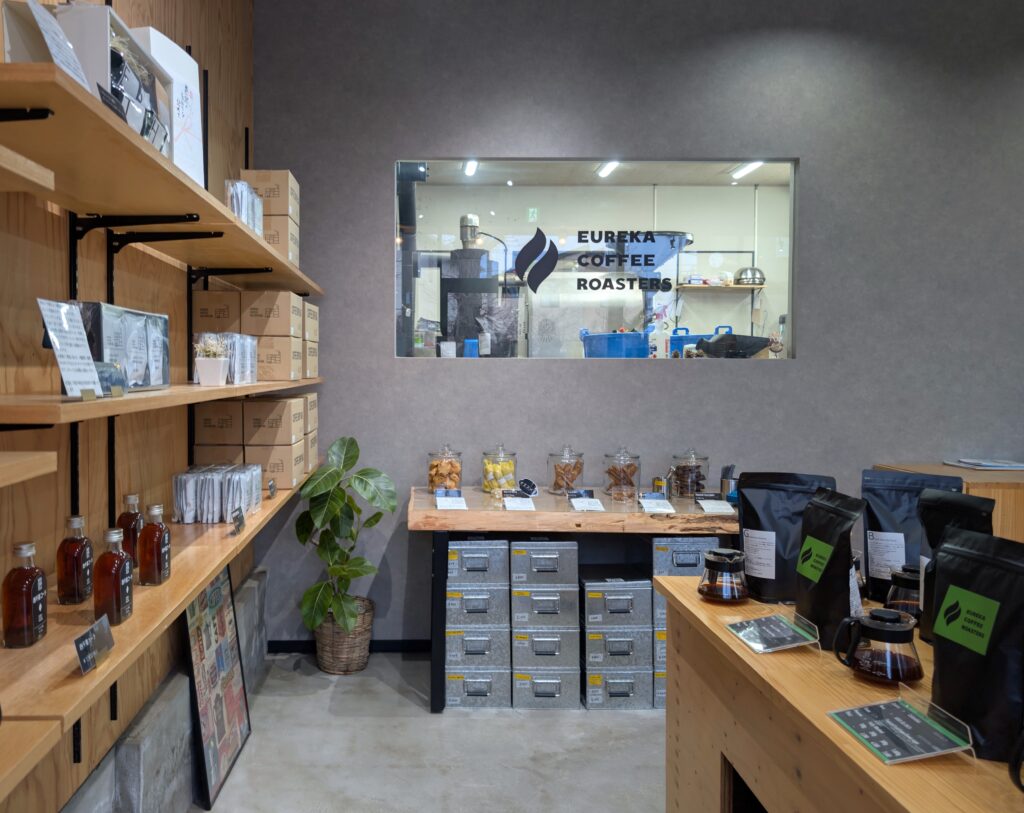
I first visited the Oguradai location back in 2024. I was bored on a hot summer weekend day and decided to go for a wander, so before I left home I searched Chiba City on Google Maps for “coffee roaster”. A few places I had never been popped up, but I had never even heard of this Eureka Coffee Roaster pinned in the middle of a residential neighborhood. Why not visit? So I did.
That visit was the first of many, and even though the location is pretty far from my home, I always try to stop by for a drink when I am in the area.
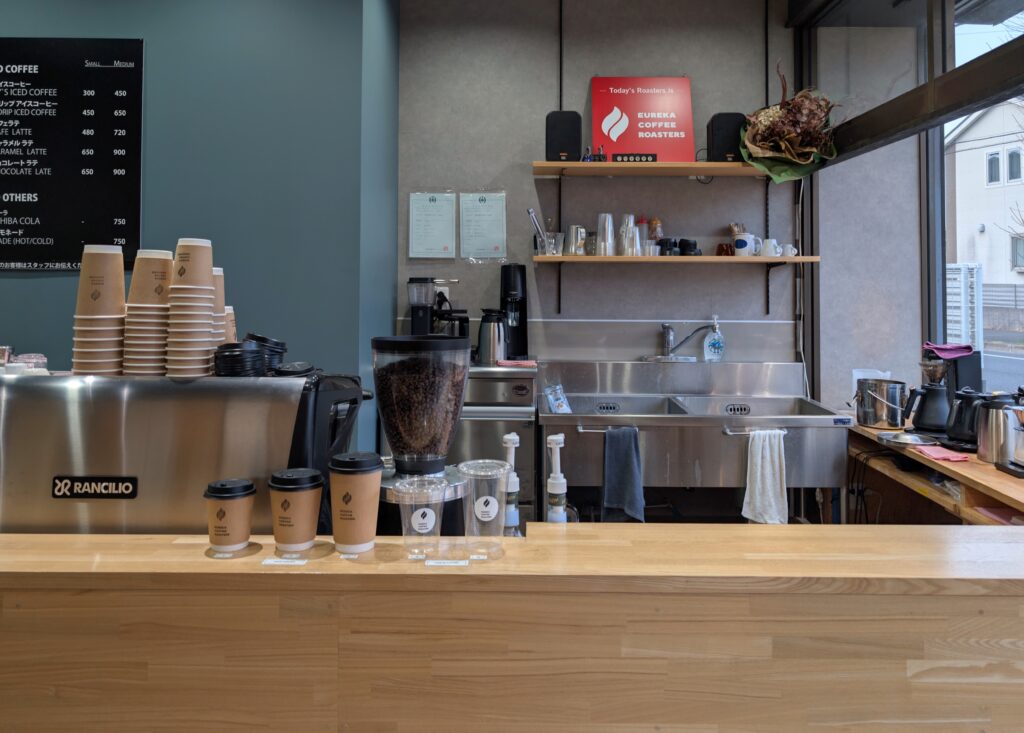
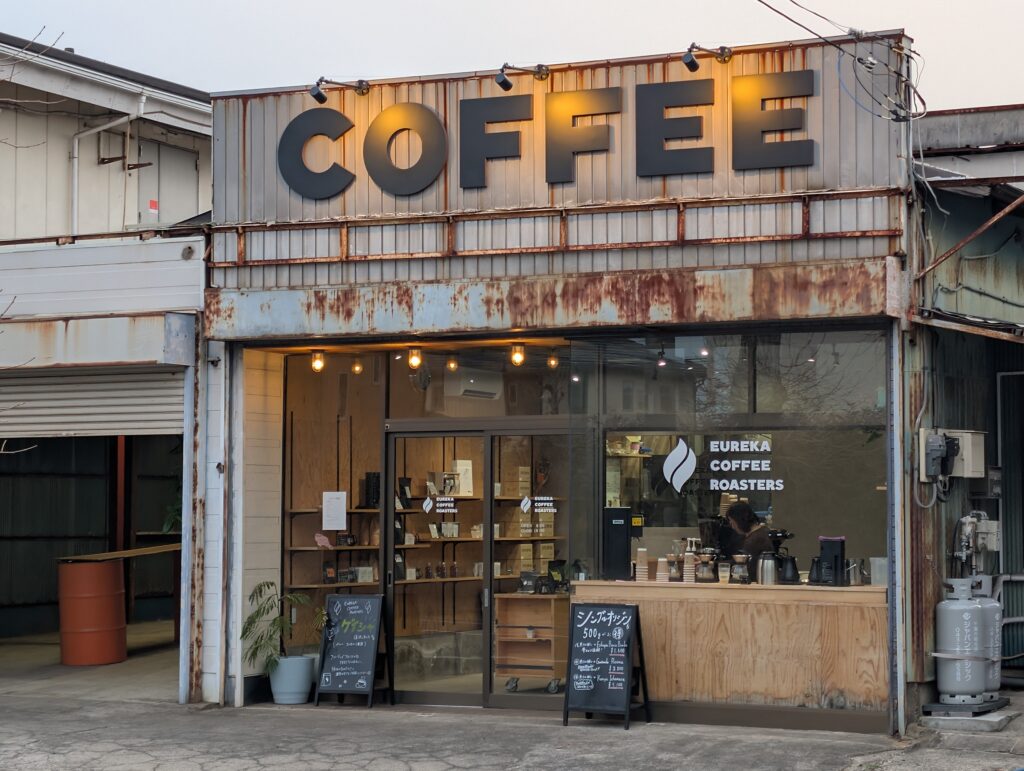
First thing to know about Eureka is it isn’t really a “coffee shop” in any traditional sense. Yes, they sell a wide variety of drinks made in house, have a small selection of baked goods made by the store, and they play music like other shops, but there isn’t really a place to sit and relax with your coffee. As you can see in the lead photo, Eureka is built in an old shop front, possibly a garage, and the only place to sit and relax with your drink is the large space next to the main retail portion.
That area is OK for sure – it’s wide and there are old barrels to sit on and standing benches to use – but it’s not a space where you will be setting up a laptop and getting some work done, or relaxing with friends. But that’s not the focus of Eureka. In the end, this is a shop for buying from a nice selection of beans at reasonable prices. That focus is why I am high on this shop.
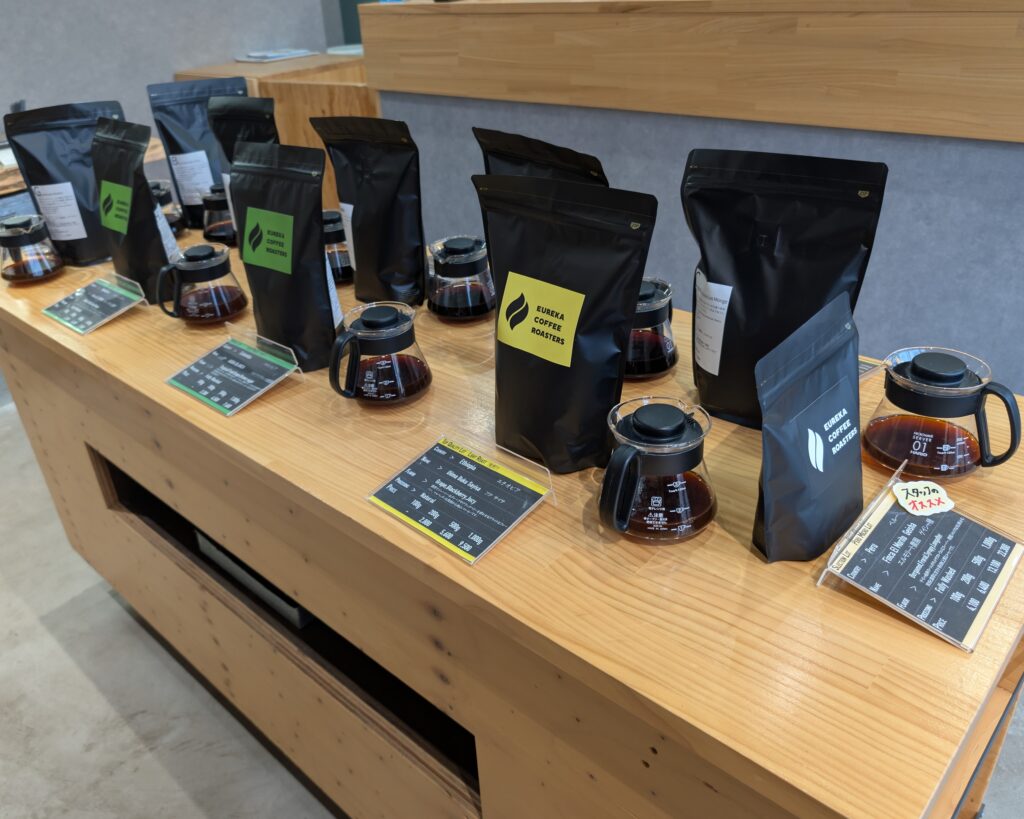
One thing I really love about Eureka is all the beans are available to try – you don’t need to rely solely on the tasting notes on the description. On the day I took the pictures in this post in March, a full 13 different beans were available to taste – the 10 shown in the above pic, plus three house blends: The “Nishi Chiba Blend”, the Espresso blend, and a house decaf.
The Nishi Chiba blend is one I buy pretty often for my office – very reasonably priced (500g for around 3000 yen), easy to drink, and somehow gets even better long off roast. I’ve only bought the Espresso blend once and I thought it was OK for espresso though a bit unexciting. I’ve yet to try the decaf.


As usual, I was handed an empty cup on entering and invited by the staff to taste anything I liked. As it was a bit late in the day, I didn’t feel too guilty about trying quite a bit of pretty much everything. In the times I have visited Eureka there hasn’t been anything too terribly exotic that I have seen – not much if anything in the way of co-ferments or unusual processes.
As you can see in the above photo gallery, almost all of the beans run about 1000 yen or less for 100g, and even the premium lot beans are just a bit over that. In 2026, that’s a refreshingly low price for good quality, freshly roasted beans. I was a bit surprised at the premium offering this time – a Peruvian Gesha. I don’t remember seeing anything quite that premium (4000 yen for 100g) on offer at Eureka before, and while I tasted it and thought it was indeed good, my palate honestly isn’t refined enough for beans that pricey.
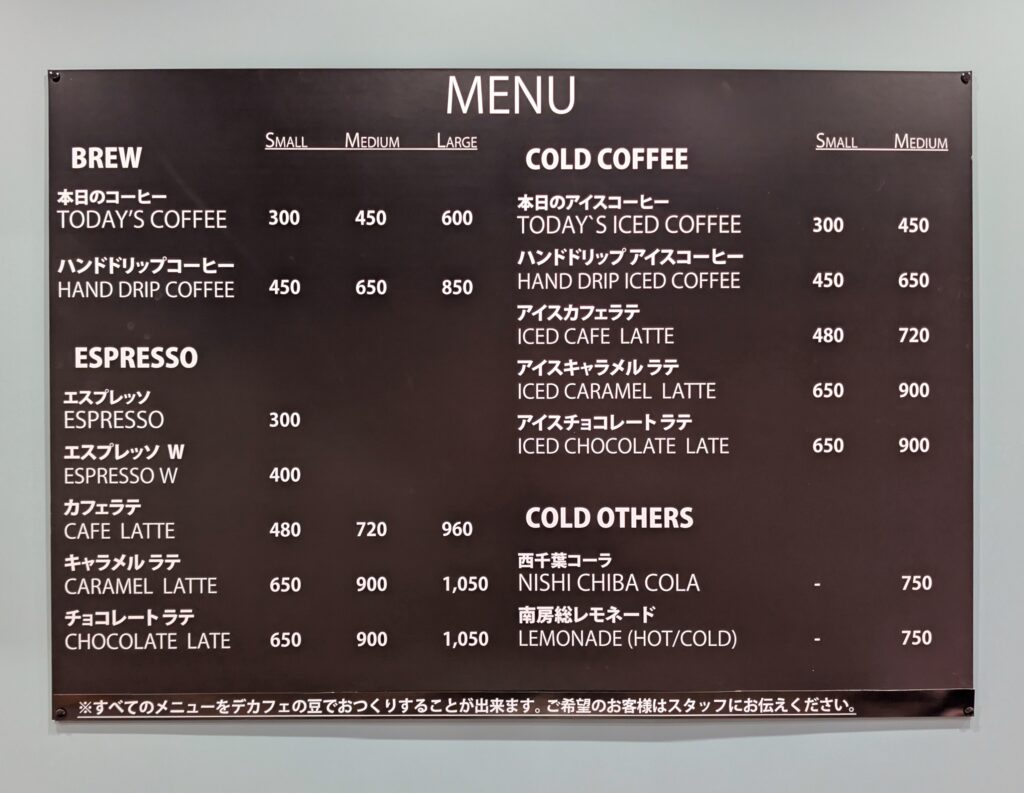
I usually get some beans and an iced coffee, but this time I switched to an iced latte which was well made. I did get a 500g bag of the Nishi Chiba blend for the office, 500g of a dark roasted Kenya Nyeri Ichamara for espresso at home (thankfully, not one of the blackened messes a lot of shops call dark roasts but a proper one), and a bag of the pictured Ethiopian Diima Buku Sayisa Natural for pourover. I’ve made a few cups of the Kenyan this week at home (both iced long black and iced latte) and found it tasty and easy to dial in.